The Complete Qatar Hotel Planning Guide: How to Choose the Right Accommodation for Business, Family, Leisure and Extended Stays
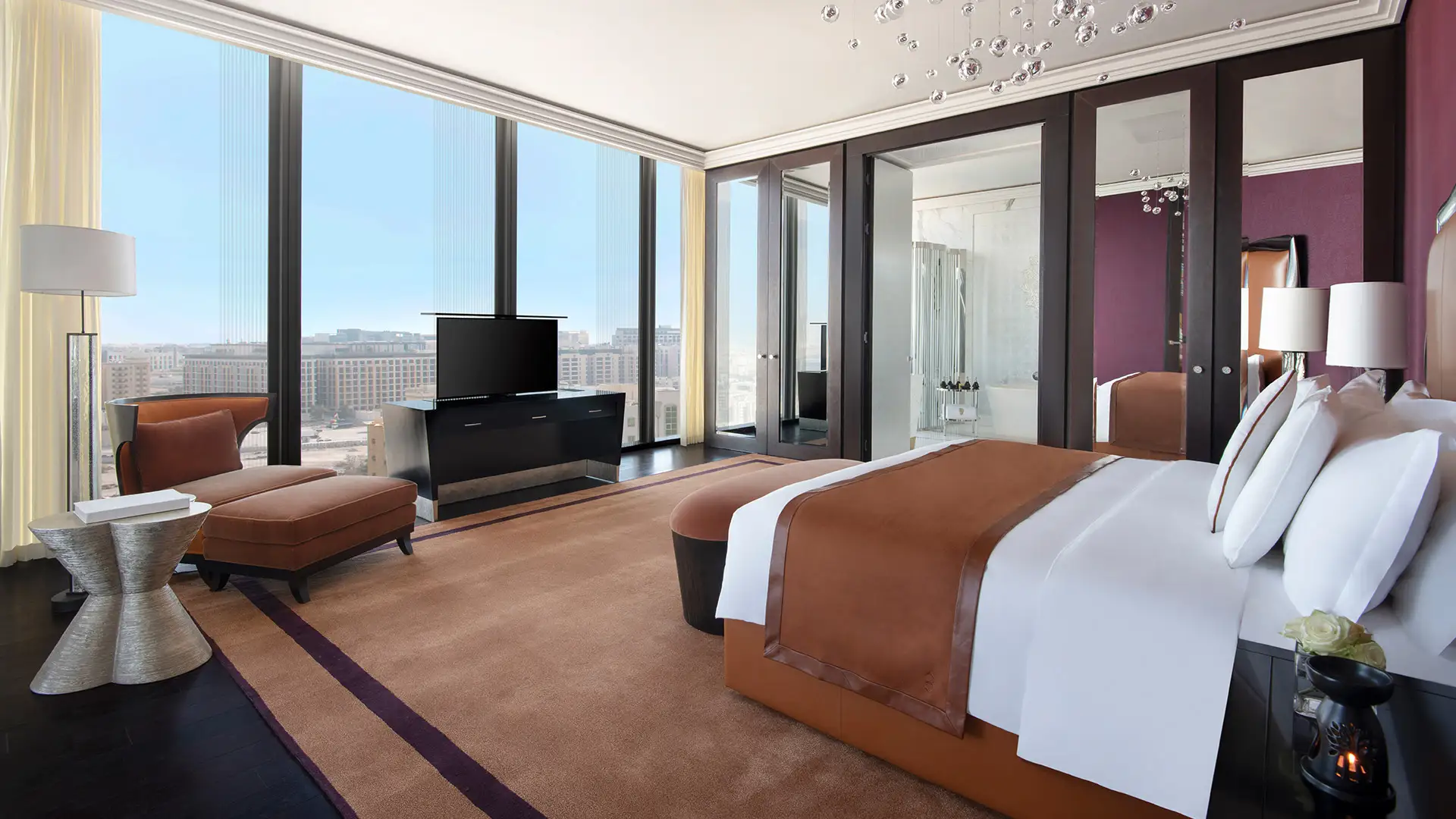
Choosing the right hotel in Qatar is a strategic travel decision rather than a simple accommodation purchase. The property you select becomes the base from which the entire journey operates, influencing transportation time, daily convenience, sleeping quality, work efficiency, dining options, relaxation opportunities and the overall rhythm of the trip. A hotel that looks excellent in photographs may not necessarily be the best choice for a particular itinerary, while a less obvious property can deliver outstanding value when its location, room design and facilities align closely with the traveller's priorities.
Qatar offers an unusually broad range of accommodation styles for a relatively compact destination. Travellers can choose from contemporary city hotels, waterfront properties, luxury suites, family-oriented accommodation, serviced residences, business-focused hotels and resort-style environments. This variety creates excellent opportunities, but it also means that choosing effectively requires a structured approach.
The most reliable method is to begin with the purpose of the journey and work outward. Instead of asking which hotel is generally the best, ask which accommodation best supports the trip you are actually planning. A business traveller may need a quiet room, reliable connectivity and efficient access to meetings. A family may require flexible sleeping arrangements, spacious rooms and convenient facilities. A leisure traveller may care about attractions, dining, shopping, views and recreational areas. A long-stay guest may place much greater importance on storage, laundry, kitchen facilities and residential comfort.
1. Define the Purpose of the Trip Before Looking at Hotels
The most common hotel-selection mistake is beginning with a list of properties before defining what the accommodation needs to accomplish. This encourages travellers to compare attractive photographs and promotional descriptions without establishing a clear set of priorities.
A more professional approach begins with the itinerary. Consider why you are travelling, how much time you expect to spend inside the hotel, which parts of Qatar you expect to visit, how frequently you will move between locations and what type of room environment will make the journey easier.
Business travellers usually benefit from efficiency. Their ideal hotel may have a practical workspace, strong internet connectivity, quiet rooms, convenient breakfast, meeting facilities and straightforward transportation. A leisure traveller may have completely different priorities, perhaps placing greater emphasis on a pleasant pool, attractive public spaces, dining, views and proximity to attractions.
Families should consider the rhythm of the entire household. Parents may need comfortable sleeping arrangements, storage, flexible dining and facilities that make downtime easier. Couples may place more emphasis on atmosphere, privacy, room design and location. Solo travellers may prefer efficient transport access and a hotel that provides both comfort and easy access to surrounding services.
Guests planning a longer visit should think of the room as a temporary home rather than simply a place to sleep. A residence-style property with more space may provide greater value than a conventional room, even when its headline rate is higher.
When comparing Hotels & Resorts in Qatar, begin by writing down three essential requirements and three desirable extras. This simple exercise immediately makes the comparison process more objective.
2. Understand Qatar's Main Accommodation Environments
Qatar's hotel landscape includes several accommodation environments, each capable of producing a different travel experience. Understanding the character of an area can be more useful than simply searching for the highest-rated property.
Doha provides a particularly broad range of hotel styles. Modern business districts can appeal to professional travellers, central areas can provide access to cultural and urban experiences, waterfront districts can create a more relaxed atmosphere, and newer developments can offer contemporary accommodation with expansive views and modern facilities.
Outside the central urban environment, travellers can also find accommodation that feels more residential or resort-oriented. This can be useful for guests who want to spend more time on the property rather than using the hotel only as a base.
The key is to select an environment that matches the travel objective. A traveller who expects to spend every day exploring museums, markets and central attractions may not benefit from staying in a location designed primarily around resort relaxation. Conversely, a guest planning a slow, comfortable holiday may appreciate a property where the facilities themselves are an important part of the experience.
3. Location Should Be Evaluated Against the Actual Itinerary
Location is one of the most influential elements of hotel value because it affects almost every other part of a journey. Yet location should not be reduced to the question of whether a property is “central.” Centrality is relative to the itinerary.
If most meetings are located in a particular business district, proximity to that district can be more useful than being near a famous attraction. If a family plans to visit several cultural destinations, a central location may reduce repeated journeys. If relaxation is the main purpose, being in a quieter waterfront environment may be more important than being near commercial offices.
Before comparing hotels, make a list of the five or six places that are most important to the trip. Then examine how each potential hotel connects with those locations. This gives you a practical measure of convenience.
Travellers researching Hotels in Doha should therefore compare neighbourhoods before comparing individual rooms. A hotel with an excellent room but a poor position for the itinerary may create more daily inconvenience than a slightly smaller room in a much better location.
4. Choose Between a Standard Room, Suite and Residence
Accommodation categories are not merely marketing labels. They represent different ways of using space. Understanding this distinction is particularly important when travelling with family, working during a trip or staying for several nights.
A standard room is usually designed for efficient sleeping and basic living. It can be an excellent option for travellers who spend most of their time outside the property. A suite typically introduces additional living space, creating greater separation between sleeping, working and relaxing. A residence or serviced apartment may add kitchen facilities, additional storage, dining areas or multiple rooms.
The right choice depends on the amount of time you expect to spend inside the accommodation. If the room is simply a comfortable base between activities, a high-quality standard room may be sufficient. If the hotel is part of the holiday experience, additional space can become significantly more valuable.
For long stays, the practical advantages of a residence can increase with every night. Storage, seating, laundry access and cooking facilities become more meaningful when the room is used as a daily living environment.
When making a Booking, examine the actual room description and layout instead of relying only on the category name.
5. Evaluate the Room as a Complete Living Environment
Professional hotel selection requires more than looking at the bed and the view. The entire room should be evaluated as a functional environment where the guest will sleep, dress, work, relax, store belongings and prepare for the next day.
The bed is naturally important. Mattress comfort, pillow quality, bedding, bedside lighting and noise control all influence sleep. A room can have excellent architecture and decoration but still be disappointing if sleeping conditions are poor.
Storage is another major factor. Travellers carrying multiple bags need enough hanging space, shelves and luggage placement. Long-stay guests should pay particular attention to storage because temporary clutter can become increasingly frustrating over time.
Seating is also worth considering. A single decorative chair is not equivalent to a comfortable sitting area. Guests who work, read or spend several hours inside the room may benefit greatly from a sofa, lounge chair or dedicated seating arrangement.
The work area should be assessed separately. A desk should have enough surface space, suitable lighting, convenient power access and a chair that can support extended use.
Bathrooms deserve the same attention. Counter space, lighting, storage, shower configuration and overall accessibility can have a substantial impact on daily comfort.
6. Room Size Is Important, but Layout Matters More
Room size is often used as a simple comparison metric, but square footage alone does not explain how comfortable a room will feel. Two rooms with similar dimensions can provide very different experiences depending on how furniture and circulation areas are arranged.
A well-designed room creates clear zones for sleeping, working, sitting and storage. An inefficient room may have more floor area but use that space poorly.
When reviewing a floor plan or room photograph, examine the distance between furniture pieces, the location of the desk, the amount of open floor space and the accessibility of wardrobes and bathrooms. These details provide a more realistic impression of functionality.
For families, layout can be particularly important because several people may use the room simultaneously. For couples, separation between sleeping and sitting areas can improve privacy and comfort. For business travellers, the position of the desk can determine whether the room works as a temporary office.
7. Sleep Quality Should Be a Primary Hotel Criterion
Travel schedules can be demanding, and sleep quality influences the entire experience. A hotel should therefore be assessed according to its ability to provide a comfortable and quiet sleeping environment.
Look for a supportive bed, appropriate pillow choices, effective curtains, controllable room temperature and reasonable acoustic insulation. The surrounding environment can matter as much as the room itself, particularly when a property is located in a busy urban district.
Travellers who are sensitive to noise should consider requesting an appropriate room location where possible. Rooms away from elevators, service areas and high-traffic corridors can sometimes provide a quieter experience.
For professional travellers, sleep quality can directly influence work performance. For families, it can determine how enjoyable the next day feels. For leisure travellers, it can make the difference between feeling refreshed and feeling exhausted after a full itinerary.
8. Lighting and Natural Daylight Can Transform a Room
Lighting is one of the most underestimated aspects of hotel design. Good lighting allows a room to adapt to different activities and times of day.
Bedside lighting is useful for reading without illuminating the entire room. Desk lighting supports work. Softer ambient lighting can create a comfortable evening environment. Bathroom lighting should be bright enough for practical tasks without becoming harsh.
Natural daylight can also affect the perception of space. Large windows can make a room feel more open and provide a connection to the surrounding city or waterfront environment.
However, views should be evaluated in context. A spectacular view can be a wonderful advantage, but it should not compensate for poor room functionality, uncomfortable furniture or an unsuitable location.
9. Technology Should Serve the Guest Rather Than Distract Them
Modern hotel rooms can include a wide range of technological features, but useful technology is defined by reliability and simplicity rather than novelty.
Stable internet access is one of the most important digital services for contemporary travellers. Business guests may depend on it for meetings, communication and cloud applications, while leisure travellers may use it for navigation, reservations, entertainment and communication with family.
Power outlets should be conveniently positioned, especially near the bed and workspace. USB or modern charging options can also improve convenience when travelling with multiple devices.
Smart televisions and digital room controls can be useful, but they should remain secondary to basic reliability. A simple lighting switch that works immediately is more valuable than an advanced system that creates unnecessary confusion.
10. Hotel Facilities Should Match Your Actual Lifestyle
A hotel's facilities can substantially increase the value of a stay, but only when they correspond to the guest's needs.
A fitness centre is valuable to travellers who maintain an exercise routine. A pool can be important for families and leisure travellers. Meeting rooms can be essential for business visitors. Wellness facilities can become a major attraction for guests who intend to spend significant time relaxing at the property.
Do not automatically choose a hotel because it has the longest list of facilities. Instead, identify which facilities you will realistically use.
A hotel with three highly relevant facilities can provide more practical value than a larger property with fifteen features that do not fit your itinerary.
| Hotel Feature | Most Valuable For | Key Evaluation Question |
|---|---|---|
| Fitness Centre | Business and active travellers | Is the equipment suitable for my routine? |
| Swimming Pool | Families and leisure guests | Will I realistically use it during the stay? |
| Meeting Space | Business travellers and groups | Can it support the type of meeting required? |
| Wellness Facilities | Relaxation-focused travellers | Are the services convenient and relevant? |
| Business Facilities | Professional travellers | Can I work efficiently without leaving the property? |
| Residence Facilities | Long-stay guests and families | Do they make extended living more practical? |
11. Dining Should Be Considered as Part of the Daily Routine
Hotel dining is not simply an additional luxury. It can significantly affect the efficiency of a stay.
Breakfast is particularly important for guests with early schedules. A convenient breakfast service can save time and create a predictable beginning to the day. Families may also appreciate flexible dining arrangements because different members may have different schedules.
For long stays, variety becomes more important. Guests may not want to eat at the same venue every day, so access to different dining styles or nearby restaurants can improve the experience.
In a resort-style property, dining can be especially significant because guests may spend much more time inside the hotel. In a centrally located city hotel, surrounding restaurants may reduce the importance of extensive on-site dining.
When comparing Hotels & Resorts in Qatar, evaluate the relationship between hotel dining and the surrounding neighbourhood.
12. Business Travellers Need Efficiency More Than Decoration
Business accommodation should be evaluated according to how effectively it supports professional responsibilities. Location, internet reliability, desk quality, quietness and transportation are often more important than decorative details.
The room should allow the guest to prepare for meetings without unnecessary difficulty. A practical desk, comfortable chair, good lighting and easy charging can make a significant difference.
Hotel public spaces may also matter. A quiet lounge, business centre or meeting room can provide alternatives when working from the guest room is not appropriate.
Check-in and check-out efficiency should also be considered. Business travellers often operate according to strict schedules, so predictable service can be more valuable than elaborate ceremony.
Guests researching Hotels in Doha for professional travel should therefore rank location and daily efficiency near the top of their comparison criteria.
13. Family Accommodation Requires Careful Space Planning
Family travel creates different accommodation requirements because several people may share the same space and follow different schedules.
Parents should consider sleeping arrangements first. The number and type of beds should match the group, and additional living space can be valuable when children need to sleep before adults are ready to do so.
Storage is equally important. Families often travel with more luggage, clothing and personal equipment than solo guests. A room that looks spacious in a photograph can feel crowded when several suitcases are opened.
Bathroom configuration should also be evaluated. Multiple guests sharing one bathroom can create bottlenecks during busy morning periods.
Facilities such as pools and family-oriented public areas can add significant value, but they should be considered alongside location, transportation and room design.
14. Longer Stays Require a Different Accommodation Strategy
The longer the stay, the more important functionality becomes. Guests staying for a week or more may quickly notice limitations that would be irrelevant during a single night.
Storage, laundry, kitchen access, seating and workspace should therefore receive greater attention. A residence or apartment-style room can sometimes offer better overall value because it supports more normal daily routines.
Long-stay travellers should also examine housekeeping arrangements and the availability of everyday services nearby. Convenience outside the hotel can be almost as important as convenience inside it.
For an extended visit, calculate the complete cost over the entire stay rather than focusing on the nightly price. A room with more functionality may reduce additional spending on services and transportation.
When comparing Hotels in Al Wakrah, long-stay guests should pay particular attention to the relationship between room size, local services and transportation requirements.
15. Transportation Is Part of the Accommodation Decision
Hotel selection and transportation planning should not be treated as completely separate decisions. The location of the property can determine how much time and money you spend moving around.
Travellers should identify their expected daily journeys before deciding whether taxis, public transportation or a rental vehicle is the most convenient solution.
A rental vehicle can provide greater independence when an itinerary includes multiple destinations or locations outside the main urban centre. On the other hand, travellers with a concentrated city itinerary may prefer to rely on taxis or public transportation.
Parking should also be investigated before selecting a hotel for a driving-based trip. Convenient vehicle access can be an important advantage for families, groups and business travellers.
Travellers who expect to drive can compare Rent a car options alongside their hotel shortlist. This creates a more realistic estimate of the complete travel budget.
16. Calculate Total Trip Value Instead of Comparing Room Rates Alone
The cheapest room is not necessarily the cheapest accommodation solution. Total value includes transportation, parking, dining, convenience, room functionality and the amount of time saved by staying in a suitable location.
Imagine two properties. One has a lower nightly rate but requires frequent transportation. The other costs slightly more but reduces daily travel significantly. If the second property saves enough time and transportation expense, its higher room price may be justified.
The same principle applies to breakfast and facilities. If a hotel includes services that you would otherwise purchase elsewhere, the effective value may be stronger than the advertised rate suggests.
Before making a Booking, estimate the accommodation cost, transportation cost and expected additional spending for each finalist.
17. Build a Practical Hotel Comparison Matrix
A comparison matrix is one of the simplest professional tools for avoiding decision fatigue. Instead of opening multiple hotel pages repeatedly, assign each property a score based on the factors that matter to your trip.
| Category | Suggested Weight | What to Evaluate |
|---|---|---|
| Location | 25% | Access to major itinerary destinations |
| Room Quality | 20% | Bed, layout, storage, bathroom and workspace |
| Total Value | 20% | Room price plus practical trip expenses |
| Facilities | 10% | Pool, fitness, wellness, business and leisure features |
| Transportation | 10% | Parking, taxis, public transport and driving convenience |
| Service | 10% | Efficiency, communication and housekeeping |
| Flexibility | 5% | Room options and practical reservation flexibility |
The percentages can be adjusted. A business traveller may increase the weight of location and workspace. A family may give more importance to room configuration and facilities. A long-stay guest may increase the weight assigned to space and residential functionality.
18. Do Not Confuse Luxury With Practical Value
Luxury can be an important part of a hotel experience, but luxury and value are not identical concepts. A premium property can be worth the additional cost when its location, service, room quality and facilities are genuinely important to the traveller.
However, paying for features that will not be used does not automatically improve the trip. A guest who spends most of the day exploring may receive greater value from a comfortable, strategically located room than from an elaborate resort with facilities that remain unused.
The correct question is not whether a hotel is luxurious enough. The question is whether the level of luxury contributes meaningfully to the purpose of the journey.
19. When a Suite Is a Smart Investment
A suite becomes particularly valuable when privacy and separation are important. Families can use separate sleeping and living areas. Business travellers can work without occupying the sleeping space. Couples may appreciate additional seating and a more spacious environment during longer stays.
Suites can also be useful when the hotel itself is an important part of the experience. If guests expect to spend substantial periods inside the property, additional space can improve the quality of the trip.
For short stays with highly active itineraries, however, the benefits may be less significant. In such cases, a well-designed room can offer stronger value.
20. When a Standard Room Is the Smarter Choice
A standard room can be the most sensible option when the itinerary is busy and the hotel is primarily a base for sleeping and preparing for the next activity.
The important point is that “standard” does not have to mean poor quality. A thoughtfully designed standard room can provide excellent comfort, particularly when the property has a strong location and reliable service.
Travellers should therefore compare the functionality of the room rather than assuming that a higher category is automatically better.
21. Evaluate Service Through the Entire Guest Journey
Service quality should be considered from arrival to departure. A hotel may provide excellent facilities, but the overall experience can be weakened by slow communication, confusing procedures or inconsistent housekeeping.
Think about the complete guest journey: arrival, reception, room access, housekeeping, dining, transportation assistance, requests and departure.
Consistency is especially important for business travellers and longer stays. Predictable service reduces the number of small problems that can accumulate during a trip.
Clear communication is also valuable for international visitors. Guests should be able to understand the hotel's services, room categories, facilities and practical policies without unnecessary uncertainty.
22. The Surrounding Neighbourhood Can Add Significant Value
A hotel should be evaluated as part of its neighbourhood rather than as an isolated building. Nearby restaurants, cafés, shopping areas, cultural attractions, transportation options and everyday services can all improve the convenience of a stay.
This becomes increasingly important for longer visits. Guests may want to buy everyday items, explore nearby dining options or take short walks without arranging transportation for every activity.
For business travellers, proximity to offices and meeting venues can save considerable time. For families, nearby services can simplify daily routines. For leisure visitors, an interesting neighbourhood can become part of the travel experience.
23. Plan Arrival and Departure Before Confirming the Hotel
Arrival and departure deserve more attention than they usually receive. A hotel can be comfortable during the stay yet inconvenient if getting there is complicated or leaving requires excessive travel time.
Consider the expected arrival schedule, luggage requirements, transportation options and approximate journey time. Early departures can make location particularly important, while late departures can make luggage storage and access to public facilities more valuable.
For short trips, arrival and departure efficiency can have an outsized effect because every hour has greater value.
24. Choose the Hotel According to Travel Pace
Travel pace should influence accommodation selection. A fast-paced itinerary prioritises location, sleep quality, breakfast convenience and transportation efficiency. A slower holiday places greater value on the hotel itself.
If you plan to spend most of the day outside, a highly functional room in a convenient location may be ideal. If you plan to spend several afternoons at the property, a pool, lounge, wellness area, attractive room and strong dining options become more important.
There is therefore no universal hotel formula. The correct choice changes according to the rhythm of the journey.
25. Consider the Difference Between City and Resort Accommodation
City hotels and resort-style properties serve different purposes. A city hotel generally functions as a convenient base for exploration, business and urban activities. A resort environment is more likely to encourage guests to spend significant time on the property.
Neither model is inherently better. The correct choice depends on the itinerary.
Guests who want to explore multiple parts of Qatar may value a centrally positioned city property. Travellers seeking a slower holiday may appreciate an accommodation environment where the hotel provides many of the experiences they want.
This distinction should be established early because it can dramatically narrow the available choices.
26. Accommodation Planning for Couples
Couples often look for a balance between comfort, atmosphere, privacy and convenience. Room design can become more important because the accommodation may be a meaningful part of the trip rather than simply an overnight base.
A comfortable sitting area, attractive view, good lighting and well-designed bathroom can contribute to the overall experience. Location also matters, particularly when couples want access to dining, shopping, cultural experiences or waterfront environments.
The best approach is to agree on a small number of shared priorities before beginning the final comparison.
27. Accommodation Planning for Solo Travellers
Solo travellers often have greater flexibility but should still consider location, transport, room functionality and convenient access to everyday services.
A strategically positioned hotel can make independent exploration easier. Public spaces can also be valuable because they provide comfortable alternatives to spending all downtime inside the room.
Solo travellers may not need large accommodation categories unless the room itself is a major part of the trip. A well-designed room can provide excellent value without unnecessary additional space.
28. Accommodation Planning for Groups
Group travel requires coordination. Room categories, connecting-room possibilities, common areas, dining, transportation and meeting spaces can become more important than the features of any single room.
The best group hotel often simplifies logistics. A convenient meeting point, practical dining options and easy transportation can reduce the amount of time spent organising everyone.
Before confirming group accommodation, verify occupancy limits and room configurations carefully so that the final arrangement matches the needs of every traveller.
29. Compare Hotels by Function Rather Than Appearance
Photography is a powerful part of hotel marketing, but photographs should be treated as evidence of design rather than proof of suitability.
A beautiful room can still be inconvenient. A dramatic lobby can conceal an inefficient guest experience. A spectacular view can be less useful than a quieter room with better sleep conditions.
Professional hotel research therefore asks functional questions. Where will I work? Where will luggage go? How will the room work at night? How easy will transportation be? Will I use the facilities? Does the surrounding neighbourhood support the itinerary?
This method produces more reliable decisions than choosing the hotel with the most impressive photographs.
30. Use a Three-Hotel Shortlist
Once the research has been completed, reduce the options to approximately three serious candidates. Keeping too many options open can make the decision harder without improving its quality.
Each finalist should satisfy all essential requirements. Differences in design, facilities, views and minor price variations can then determine the final selection.
A useful shortlist can include one hotel that wins on location, one that wins on room quality and one that wins on total value. This creates a clear basis for comparison.
Travellers exploring Hotels in Al Wakrah can use exactly the same three-property method to simplify the selection process.
31. Calculate the Cost of Convenience
Convenience has a financial value. A hotel that reduces travel time, transportation costs and daily logistical effort can justify a higher room rate.
To calculate this value, estimate how much transportation would be required from each shortlisted property. Add parking if necessary and consider the number of journeys expected each day.
Then compare the result with the difference in room rates. The hotel with the lower headline price may not be the better financial decision.
Convenience also has a time value. Saving thirty minutes several times each day can create additional time for meetings, sightseeing, relaxation or family activities.
32. Consider the Hotel's Flexibility
Travel plans can change, so accommodation flexibility can be useful. Review reservation conditions carefully and understand the available options before confirming.
Flexibility can also refer to the range of room categories available. Properties with several room types can make it easier to adapt if group size or stay requirements change.
However, flexibility should not be confused with uncertainty. The strongest planning approach is to establish the essential requirements first and maintain flexibility only around less important details.
33. Build a Personal Hotel Score
Every traveller can create a simple score based on the seven major categories: location, room, value, facilities, transport, service and flexibility.
Give each category a score from one to ten and multiply it by its importance. This makes it harder for one attractive feature to dominate the decision.
For example, a business traveller might give location a very high weighting. A family might increase the importance of room configuration and facilities. A long-stay guest may give storage and residential functionality more weight.
34. The Importance of a Comfortable Work Area
Remote work has made the workspace an increasingly relevant hotel feature. Guests who need to answer emails, attend meetings or prepare documents should evaluate the desk and chair carefully.
The desk should provide enough surface area for a laptop and essential materials. Power access should be close enough to avoid awkward cable arrangements. Lighting should be adequate during both daytime and evening use.
Noise control is equally important. A beautiful workspace is of limited value if the room is exposed to constant corridor noise or other disturbances.
35. Bathroom Design Is Part of Overall Room Quality
Bathrooms can significantly influence how comfortable a room feels. Good design provides practical storage, adequate lighting, appropriate shower facilities and enough space to prepare without creating unnecessary congestion.
For families and groups, bathroom capacity becomes especially important. For long stays, durable and practical design can be more meaningful than decorative finishes.
Travellers should also examine whether the bathroom layout provides sufficient privacy and whether the room design makes it easy for multiple guests to use the space without disturbing one another.
36. Storage Matters More Than Many Travellers Expect
Storage is often overlooked during the initial hotel search because it is rarely the most attractive feature in promotional photography. Yet insufficient storage can become one of the most persistent inconveniences during a longer stay.
Look for wardrobes, drawers, shelves, luggage space and practical places for personal items. Families and business travellers should pay particular attention because they often carry more belongings or equipment.
A room that allows guests to organise their belongings properly generally feels more comfortable throughout the stay.
37. Evaluate the Hotel From Morning to Night
A powerful way to test accommodation is to imagine a complete day. Wake up, prepare, have breakfast, leave the property, return later, work or relax, have dinner and prepare for sleep.
At each stage, ask whether the hotel supports the routine efficiently.
Is breakfast convenient? Is transportation easy? Is there somewhere comfortable to sit? Is the room quiet? Can luggage remain organised? Is the bathroom practical? Can you work if necessary? Can you return easily at the end of the day?
This daily-life approach often reveals differences that are invisible when hotels are compared only through room photographs.
38. Research the Hotel and the Destination Together
Accommodation research should be integrated with destination planning. The best hotel for one itinerary may be unsuitable for another because the surrounding attractions and transportation patterns differ.
Instead of choosing the hotel first and creating an itinerary around it, establish the broad itinerary first and use the hotel to support it.
Travel resources such as The Travel Journal can complement this process by helping organise accommodation research alongside wider destination planning.
39. Make the Booking Decision With a Final Checklist
Before confirming accommodation, review the following checklist carefully:
- Is the location suitable for the main itinerary?
- Does the room configuration match the number of guests?
- Is the room comfortable for the full duration of the stay?
- Are storage and luggage arrangements adequate?
- Is there a suitable workspace if required?
- Are internet and charging facilities practical?
- Does the bathroom meet the needs of the group?
- Are the hotel's facilities genuinely useful?
- Are dining options suitable for the schedule?
- Is transportation convenient?
- Is parking required and available?
- Has the complete trip cost been calculated?
- Does the accommodation style match the pace of the trip?
If several important answers are negative, return to the shortlist rather than making a compromise simply because the property looks attractive.
40. How to Choose Accommodation for a Short Qatar Visit
Short visits require particularly careful hotel selection because there is less time to recover from an inconvenient location. The hotel should ideally reduce unnecessary travel and simplify daily routines.
For a short city visit, prioritise location, comfortable sleep, efficient transportation and easy access to the experiences that matter most.
A large number of facilities may not be necessary because the traveller may spend most of the visit outside the hotel. A strategically positioned room can therefore provide greater value than a larger property with extensive facilities.
41. How to Choose Accommodation for a Longer Qatar Holiday
Longer holidays allow travellers to place more emphasis on the hotel experience itself. A property with a comfortable pool, attractive public spaces, dining variety, wellness facilities and larger rooms may become more valuable because guests have time to use them.
Longer stays also make room functionality more important. Storage, seating, work areas and practical bathrooms can strongly influence satisfaction over time.
Travellers should therefore adjust their priorities according to the duration of the trip rather than applying the same hotel-selection formula to every visit.
42. How to Choose Accommodation for Business and Leisure Combined
Some travellers combine meetings with leisure activities. These trips require a balanced accommodation strategy.
During business hours, efficient transportation and workspace may be the priority. Outside working hours, location, dining and leisure facilities may become more important.
A hotel positioned between business districts and leisure destinations can therefore provide stronger overall value than one that is perfect for only one part of the itinerary.
When making a Booking for this type of journey, rank both professional and personal requirements before comparing room categories.
43. Why the Best Hotel Is Personal
Hotel recommendations should always be interpreted in relation to the traveller. There is no universal property that will be ideal for every person.
A business traveller may consider a hotel excellent because it reduces commuting time. A family may consider another property superior because of its room configuration. A couple may prioritise atmosphere and views. A long-stay guest may prefer residential functionality above all else.
This is why the phrase “best hotel” should always be followed by a purpose: best for business, best for families, best for a short city stay, best for a long stay or best for a particular type of experience.
44. Use Hotel Facilities as Part of the Trip Strategy
When the hotel offers relevant facilities, incorporate them into the itinerary. A fitness centre can support a regular routine. A pool can provide a recovery period between activities. A comfortable lounge can become a useful workspace. Dining facilities can simplify evenings after a demanding day.
The hotel becomes more valuable when its facilities reduce the need to arrange additional activities or services elsewhere.
45. Accommodation for Travellers Who Prioritise Relaxation
Relaxation-focused travellers should pay close attention to atmosphere, noise, room comfort, wellness facilities, outdoor areas and dining.
The property should feel comfortable even when there is no scheduled activity. A spacious room, pleasant view, comfortable seating and high-quality public spaces can make the accommodation itself part of the holiday.
In this situation, a resort-style property may be preferable to a compact city hotel because the purpose of the stay is not simply to explore but also to slow down.
46. Accommodation for Travellers Who Prioritise Exploration
Exploration-focused travellers usually benefit from a strong base rather than an extensive resort environment. Location, transportation, comfortable sleep and practical room design are likely to be more important than the number of on-site facilities.
The ideal hotel allows the traveller to leave efficiently in the morning, return comfortably at the end of the day and recover for the next activity.
For these travellers, the neighbourhood itself can be one of the most important hotel features.
47. The Role of Design in Modern Qatar Hotels
Contemporary Qatar hotels often use design as a major part of the guest experience. Architecture, materials, lighting, furniture and local cultural references can create a distinctive sense of place.
Design can add genuine value when it supports comfort and atmosphere. However, travellers should distinguish between decorative impact and practical usability.
The best hotel interiors usually combine visual identity with efficient room planning, comfortable furniture, good lighting and logical circulation.
48. Evaluate Value Over the Entire Stay
Hotel value should be judged across the full number of nights. Small inconveniences that seem insignificant during one night can become much more noticeable during a week-long stay.
Conversely, a facility that is only moderately useful for one night may become highly valuable when used repeatedly.
This is why the correct accommodation decision can change depending on stay duration. Always evaluate the property according to the number of days you will actually spend there.
49. A Professional Final Comparison Framework
Before choosing the final property, compare your finalists according to seven questions:
- Which hotel has the most suitable location?
- Which hotel provides the strongest room functionality?
- Which hotel best supports the purpose of the trip?
- Which hotel provides the most useful facilities?
- Which hotel creates the simplest transportation plan?
- Which hotel provides the strongest total value?
- Which hotel would remain comfortable if the itinerary changed slightly?
The property that performs consistently well across these questions is usually a stronger choice than one that wins dramatically in only one category.
50. Building a More Confident Qatar Accommodation Decision
A professional hotel-selection process does not need to be complicated. It needs to be structured. Start with the purpose of the trip, define the essential requirements, identify the most suitable area, compare room functionality, assess relevant facilities, calculate transportation needs and then examine total value.
Once those factors have been established, the final decision becomes considerably easier.
Travellers can use Hotels & Resorts in Qatar as a starting point for comparing different accommodation styles and then narrow the search according to their itinerary and priorities.
For visitors concentrating on the capital, Hotels in Doha can be evaluated according to neighbourhood, room category, business accessibility, leisure opportunities and transportation convenience.
For travellers considering other urban environments, Hotels in Al Wakrah can be assessed using the same framework, with particular attention to the relationship between the accommodation and the planned itinerary.
Transportation can then be integrated into the final decision. Travellers who require independent mobility may compare Rent a car options as part of the complete trip plan rather than treating the vehicle decision separately.
For broader destination research, The Travel Journal can be incorporated into the planning process alongside accommodation comparisons and itinerary development.
51. Frequently Asked Questions About Qatar Hotel Planning
Start with the purpose of the trip and the locations you expect to visit most often. Once these are established, compare hotel areas, room types, facilities, transportation and total value. This approach is more reliable than beginning with hotel ratings or room photographs.
Doha can be an excellent base for travellers whose itineraries focus on business, urban attractions, shopping, dining and cultural experiences. However, the best location depends on the purpose of the trip and the areas you plan to visit.
Choose a suite when additional space, privacy or separate living areas will materially improve the stay. A standard room may provide better value for short, active itineraries where most of the day is spent outside the hotel.
They can be, but their value depends on how much time you expect to spend at the property. For a busy itinerary, location and room comfort may matter more. For a slower trip, facilities such as pools, wellness areas and lounges can become much more valuable.
Families should examine sleeping arrangements, room size, storage, bathroom configuration, dining convenience, transportation and facilities such as pools or family-oriented spaces. A practical layout is often more important than a large room size alone.
A strong business hotel generally combines an efficient location, reliable internet, a comfortable workspace, quiet sleeping conditions, convenient transportation and responsive service. Meeting facilities can also be useful when professional appointments take place at the property.
Long-stay guests should prioritise storage, comfortable seating, workspace, laundry access, kitchen or kitchenette facilities where appropriate, reliable internet, housekeeping arrangements and access to everyday neighbourhood services.
It depends on your itinerary. A rental vehicle can provide flexibility when travelling between several areas, while taxis and public transportation may be more convenient for a concentrated urban itinerary. Consider parking, driving time and total cost before deciding.
Compare the complete cost rather than the nightly room rate. Include transportation, parking, breakfast, additional services and any costs created by an inconvenient location. The property with the lowest advertised price is not always the property with the lowest overall travel cost.
Three strong candidates are usually enough for an effective final comparison. Each candidate should already satisfy your essential requirements. You can then compare secondary factors such as design, views, facilities, flexibility and price differences.
52. A Practical Final Checklist Before Confirming Accommodation
Use the following final checklist immediately before confirming your accommodation:
- Location The hotel supports the main itinerary.
- Room The room category and sleeping arrangement are correct.
- Comfort The bed, lighting, temperature control and noise environment are appropriate.
- Storage There is enough practical space for belongings.
- Work A suitable workspace is available if needed.
- Facilities The important hotel facilities match your travel style.
- Dining Breakfast and other food options fit the schedule.
- Transport The daily transportation plan is practical.
- Parking Parking requirements have been checked if relevant.
- Budget The complete accommodation and travel cost is understood.
- Flexibility The reservation conditions match the certainty of the itinerary.
A well-planned Qatar hotel stay begins with understanding how accommodation connects to the rest of the travel experience. The room influences sleep and productivity. The location influences transportation and time. Facilities influence relaxation and convenience. The neighbourhood influences daily exploration. The reservation strategy influences flexibility and budget.
When these elements are considered together, hotel selection becomes much more than comparing room rates. It becomes a structured process for creating a smoother, more comfortable and more efficient trip.

Comments
Post a Comment